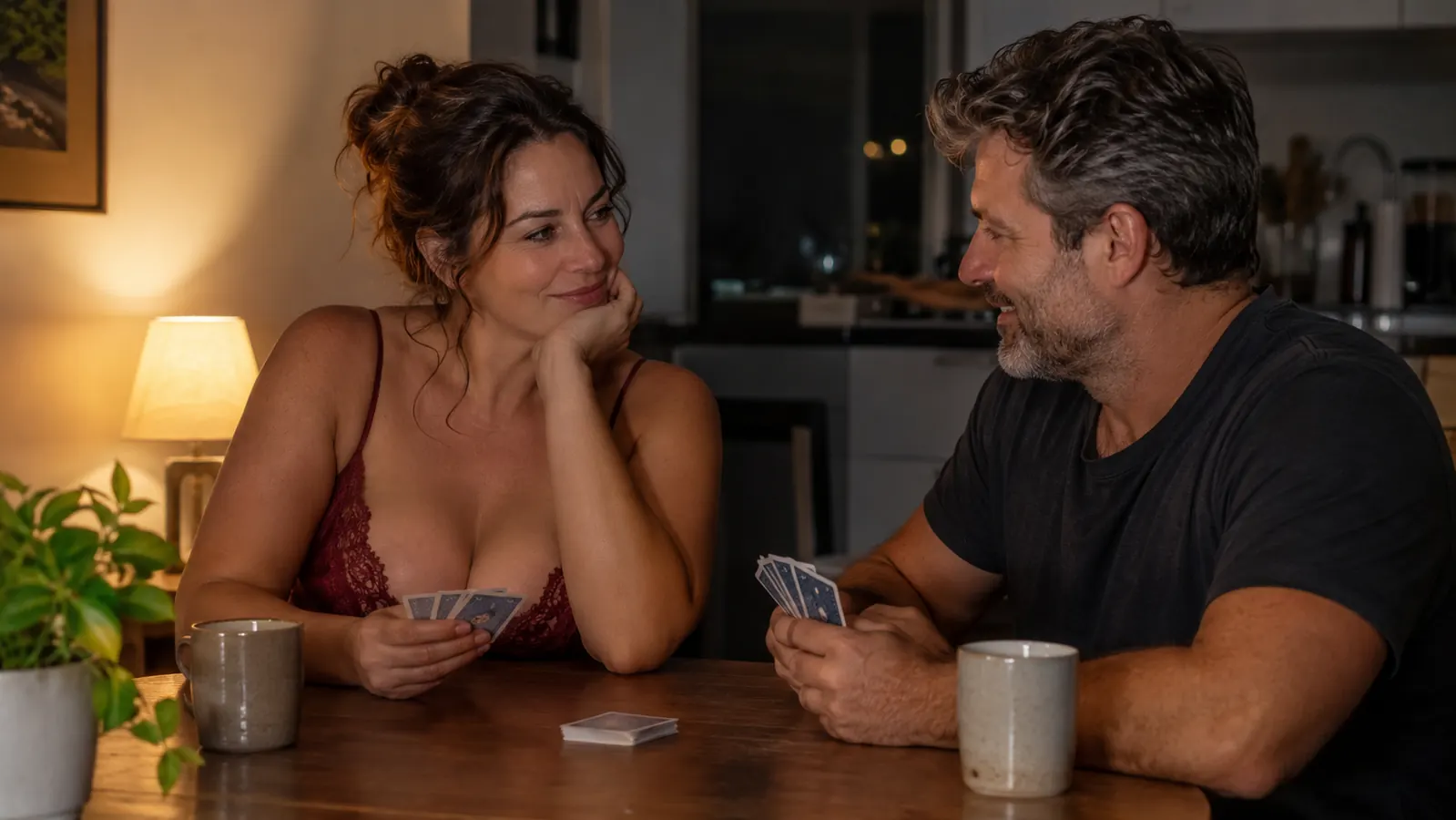
For a while there, Thursday nights in our house looked like this. Paul on one end of the couch with a phone. Me on the other end with a book. Both of us tired, neither of us saying anything that mattered. We had a standing no phones night, and we followed it exactly, and it fixed nothing at all, because silence with the phones off is still silence. What finally worked was having a specific thing to say out loud to each other that neither of us had to invent on the spot. That sounds like a small thing. It is the entire reason a conversation deck lives on my kitchen table now.
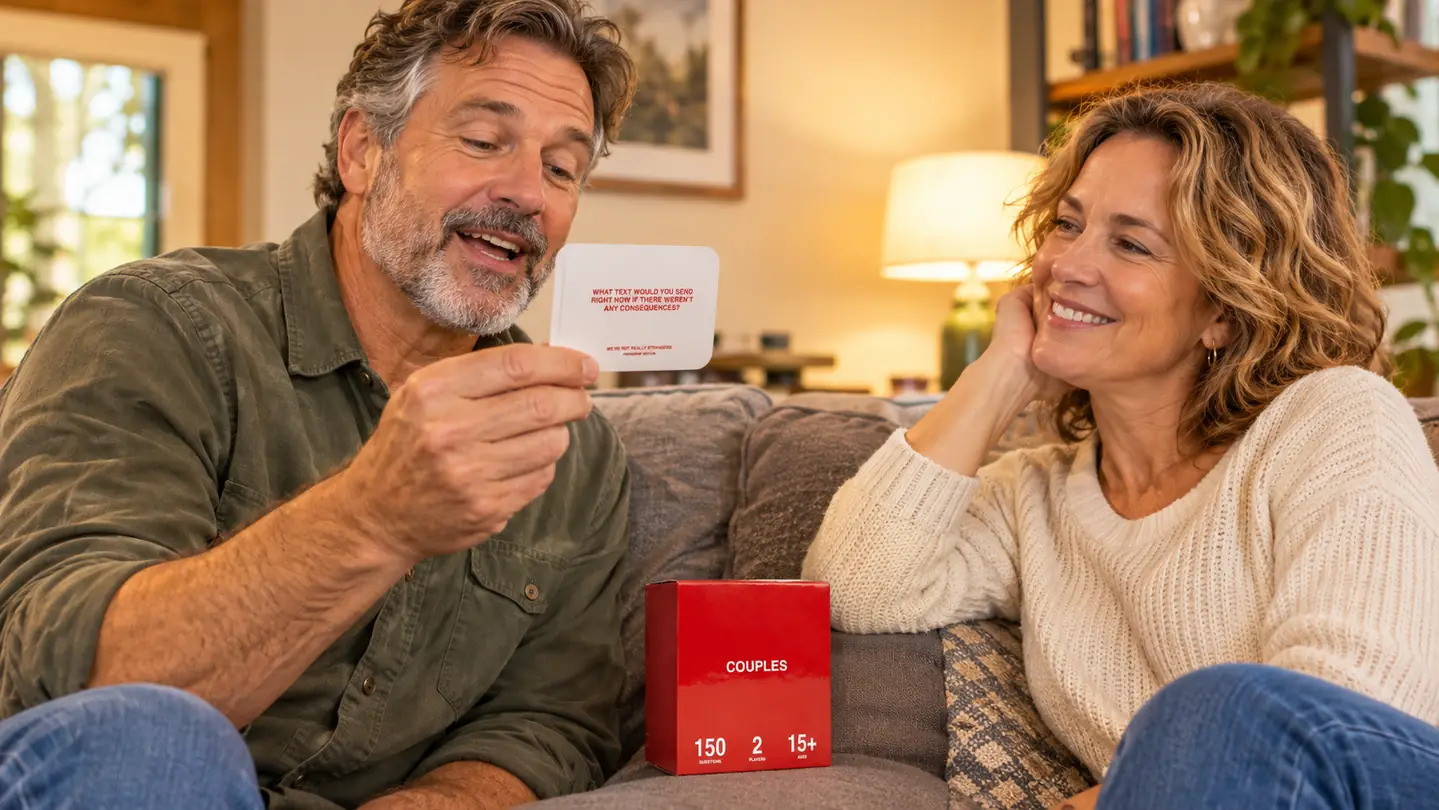
The deck we use is WE'RE NOT REALLY STRANGERS Couples Edition. Two players, about fifteen minutes, ages fifteen and up, and nothing to set up beyond opening the box. That last part matters more than the questions themselves, honestly. Anything that needs me to explain rules or keep score after nine o'clock on a weeknight is not getting played twice. This is the version of a game night that survives two teenagers, a dishwasher that needs emptying, and a husband who would much rather listen than talk.
The one deck that made it past week three at our table
Two players, fifteen minutes, no score pad, no rulebook with a page of exceptions. It is the only game we have ever kept out on the counter instead of burying in the closet.
Amazon Check Today's Price on Amazon →Step 1: Pick a Night That Is Already Boring
Not Friday. Not Saturday. Not the one night a week when you both still have energy and could plausibly leave the house. For us it is Thursday, which became our no phones night a few years back mostly because nothing else happens on a Thursday. The specific night does not matter. The repetition does. A deck that comes out once every three months is a novelty. A deck that comes out every week turns into a habit, and a habit is the only thing that gets a quiet man like Paul talking without being asked.
Phones go in a drawer in another room. Not face down on the table, where they still buzz and still glow and still pull one of you out of the conversation every ninety seconds. We tried the bowl on the counter first, back in the early weeks, and it lasted exactly one night. Paul's phone lit up at 8:40 with a work group message about a job site, he glanced at it, and we spent the next twenty minutes talking about a heat exchanger instead of the card sitting in front of us. A drawer in the mudroom, closed, ended that in one evening. The drawer sounds dramatic. It takes about four minutes to get used to, and then it stops feeling like a rule and starts feeling like the reason the room is quiet enough to hear each other.
If you have kids at home, give them a warning earlier in the day. Ours are sixteen and fourteen, and both of them can smell a planned conversation from a mile away. Announcing at dinner that the kitchen table belongs to us after nine cuts the interruptions down to maybe one request for a glass of water.
Step 2: Open the Box and Deal With Nothing Else
There is nothing to learn. WE'RE NOT REALLY STRANGERS Couples Edition is a box of cards built for two players, and the box estimates fifteen minutes, and that is genuinely the whole setup. No score pad, no board, no timer, no rulebook. I have opened games that took longer to teach than to play, and every one of them lives in the closet now with the tape still on the lid. The first night we opened this one, I tipped the cards out on the table expecting to sort them into piles the way you do with most games, and there was nothing to sort. You draw a card, you read it, that is the game.
Keep the box on the table. It weighs about as much as a paperback, so it fits in the basket where you keep the coasters, and nobody has to go hunting for it. The cards are cardstock, the deck is in English, and the recommended age on the box is fifteen and up, which in our house means it does not come out until the kids are upstairs. Not because the questions are scandalous. Because the whole point is that nobody else is in the room.
Decide in advance who reads first. In our house that is me, because Paul will hold a card for a full minute deciding whether to read it or hand it over, and that minute is not the point of the evening. First reader, then alternate. That is the entire system, and you do not need a better one.
Step 3: Read the Card Out Loud, Then Wait
Read it word for word and then stop talking. This is the step where most couples lose the whole night. One of you reads a question, the other one laughs and fires off a joke answer, and the question is gone. The joke is a door closing. Paul does this. I do it too, only faster.
Wait five seconds before you answer. Not for drama, just because the honest answer usually arrives second. The first thing that comes to mind is the safe answer you have given before at somebody else's dinner party. The second thing is the one that makes the evening worth having.
And if a card lands flat, say so and move on. I remember one about a shared dream that got a shrug from both of us, and we turned it face down without ceremony and were laughing again two cards later. Some of them will feel like a guidance counselor wrote them for a different couple entirely. There is no rule that says you have to sit with a bad question out of politeness.
Paul answered a card about the last time he felt proud of me without looking at the ceiling first. That had not happened in years.
Step 4: Stop at Fifteen Minutes, Not Ninety
The box estimates fifteen minutes, and I treat that as a target rather than a minimum. Some nights we run forty, because a card opens something and neither of us wants to be the one who puts the lid back on. Those nights are rare. Most Thursdays run twelve to twenty minutes and end while we are both still enjoying ourselves, which is precisely why the deck comes back out the following week.
The night we played for an hour and a half, we were both tired and we pushed through two rounds too many, and a question that should have been interesting turned into a chore. I remember looking at the clock and thinking about a stack of papers I had not graded. I do not remember the last card.
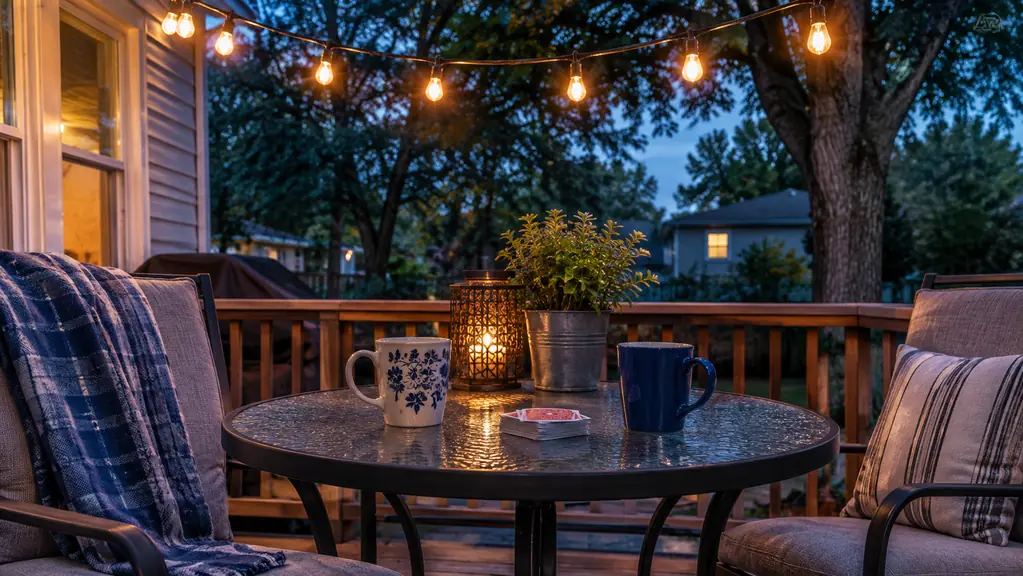
Our stop signal is unglamorous. We each make a mug of tea when we sit down, and when the second mug has gone cold and I catch myself turning it in my hands without drinking, that is the signal. The deck goes back in the box, no discussion, no negotiating. It has worked every time, mostly because arguing about it would take longer than the last three cards are worth.
Step 5: Put the Deck Away and Leave the Last Answer Alone
Do not turn the last answer into a project. If Paul says something on a card about missing the Saturday morning walks we used to take down the Scioto trail before the kids' schedules ate them, the wrong move is to be standing in the kitchen at ten o'clock building a walking schedule on the back of an envelope. The right move is to say thank you, close the box, and let the thing sit overnight.
Bring it up later, casually, somewhere that is not the kitchen table. The car is good. The porch is better. A card answered at the table is a first draft, and the follow-up question a day later is where the actual conversation tends to happen.
And if a card opens something bigger than the two of you can carry on a Thursday, that is not a failure of the deck. That is information. WE'RE NOT REALLY STRANGERS is a box of questions, not a counselor, and I would say that out loud to anyone who asked me in person.
What Else Helps
Light matters more than you would think. The overhead kitchen light makes a card game feel like a staff meeting. We moved the floor lamp in from the living room corner and put it behind Paul's chair, and I noticed the difference in his shoulders before I noticed it in the conversation. One lamp, or a candle if you are that kind of household, changes the temperature of the entire evening. So does having something to do with your hands. Paul does noticeably better talking when he is holding a mug.
Do not play right after a fight. This is the single most useful thing I can tell you. A deck of questions is a magnifying glass. Point it at a good evening and it makes the evening better. Point it at a bad one and it makes the bad one worse. Save it for a night that is already fine.
And do not treat it as a rescue. If the two of you have not had a real conversation in a year, a box of cards is not going to be the thing that repairs it. What it can do is give you a low-stakes place to start, which is not nothing. It is also not everything, and pretending otherwise sets you up to be disappointed by a deck of paper.
Where It Fell Flat for Us
We had one genuinely bad night with it. It was a Tuesday, not a Thursday, and we had just gotten a plumbing estimate that made me go quiet for an hour. I pulled the deck out anyway, and a question about what we each needed more of turned into an argument about the bathroom sink. The cards did not cause that. But they did not help either, and I should have known better than to start.
The other thing I would tell a friend is that this format will not suit every couple. If one of you hates being put on the spot, the first few rounds will feel like a pop quiz. We got past it by letting Paul read every card himself before answering, so he had a beat to think. If that still sounds miserable to you, a game with a board and a task might land better, because the talking happens sideways while you are busy doing something else.
What I have landed on after a few years of this is that the deck is not the thing. The Thursday is the thing. The deck is just what makes the Thursday easy enough to keep, and easy enough matters when you are forty-six with two teenagers and a husband who came home from a furnace repair at seven o'clock already talked out. Fifteen minutes of someone asking me a real question is worth more to me than a night out we would have to schedule three weeks in advance.
Fifteen minutes on a Thursday. That is the whole ask.
Two players, one box, no scores to keep. If your no phones night has turned into two people reading in the same room, this is the cheapest way I know to change that.
Amazon Check Today's Price on Amazon →